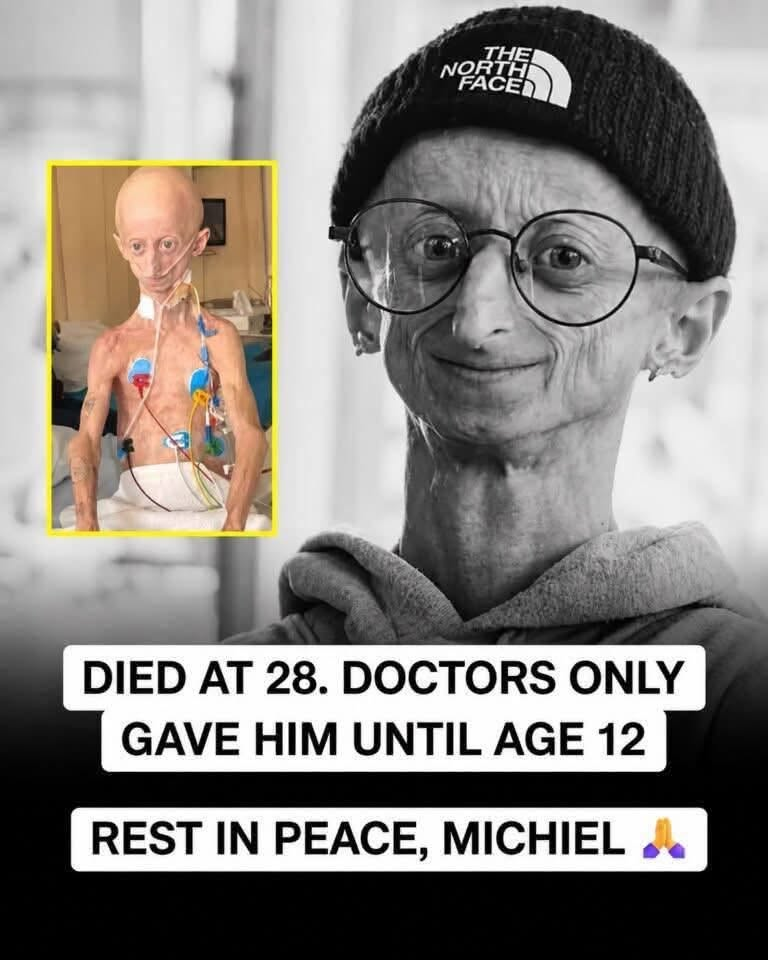
When Michiel Vandeweert was a child, doctors told his family that he would probably not make it to age 12.
He had progeria, Hutchinson-Gilford syndrome, a genetic disease so rare that it ages the body at a speed that gives no one enough time. Science estimates that the average lifespan with this condition is around 15 years.\
Michiel made it to 28 He never hid. At age 15, he published a book with his own story, “”Ik Ben Michiel,”” “”I Am Michiel.”” That title already explained everything: he did not want people to see him as a disease, but as a person.
He became a streamer. He played video games, made music as a DJ, and talked about his day-to-day life in front of a camera. He gained more than 90,000 followers across Instagram, YouTube, and Twitch—people who came to watch him play and stayed for him.
He won a Jamie Award for his gaming content. He was nominated for a Kastaar, one of the most important awards in Flemish television.
He had a younger sister, Amber, 20, who was also born with progeria. Together, they starred in a documentary this year, “”How To Be Alive: Amber and Michiel,”” in which they showed, without filters, what it means to inhabit a body racing against time.
He was a KRC Genk supporter. The club paid him a public tribute upon learning the news.
Doctors gave him 12 years. He used the extra 16 to tell his story, win awards, make thousands of strangers laugh, and leave behind a book with his name on the cover.
Diepenbeek opened a book of condolences. Somewhere in the lines of that book, someone will write that Michiel never lived in fear of the clock: he lived despite it.