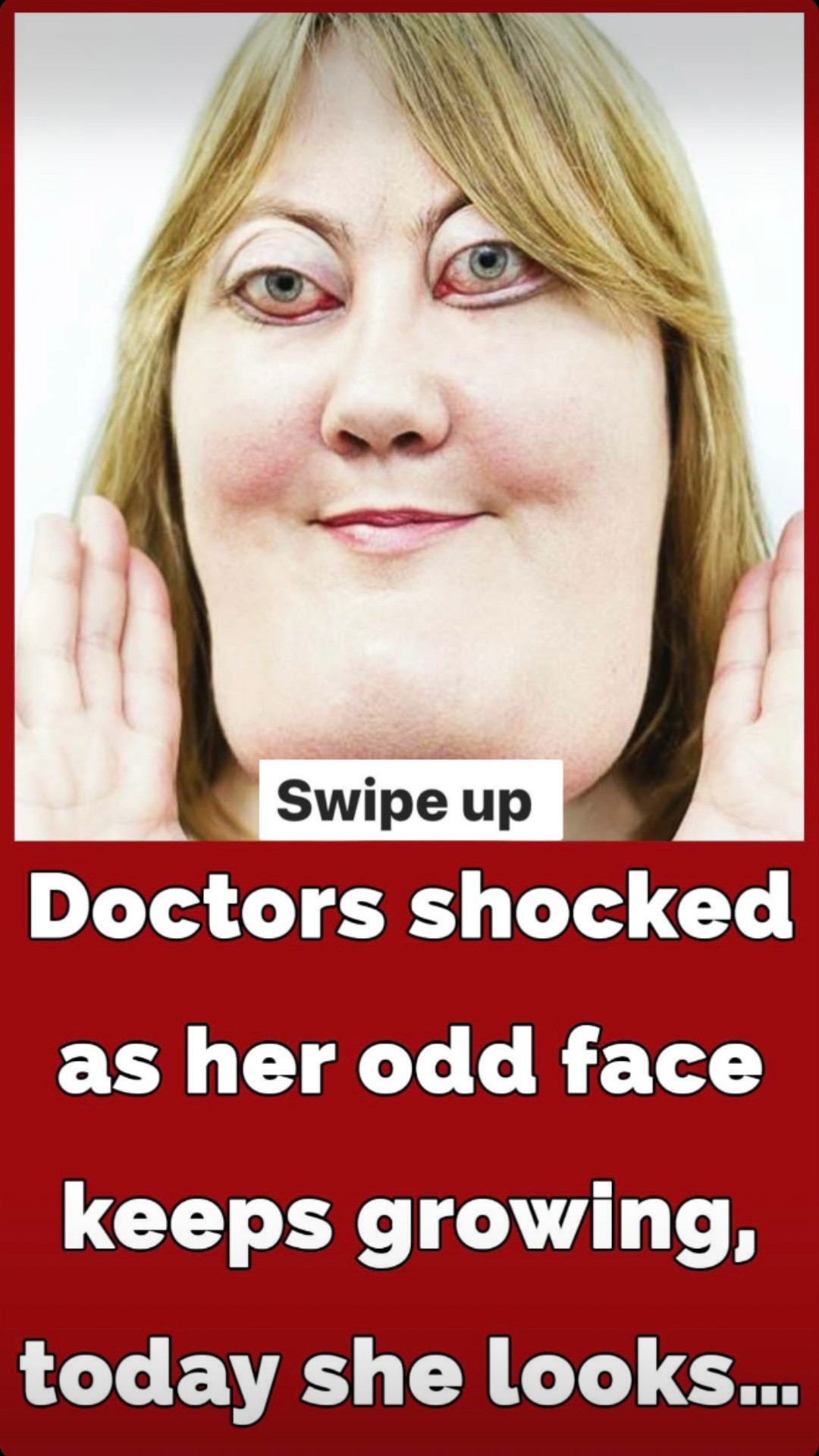
Forget beauty standards, this is the face that literally broke the mold.
Victoria Wright was just four when her life took a dramatic turn that most people couldn’t even imagine. It all started with a subtle change in her jaw, but it quickly spiraled into a rare genetic mystery that had her doctors scratching their heads and made many stare.
Imagine carrying the weight of a bowling ball in your lower face every single day.
Sadly, that has been the reality of Victoria Wright who grew up battling cherubism, a condition that causes the jawbone to expand into an abnormal, stony overgrowth.
From brutal comments from bullies on the school bus to constant side-eye from complete strangers, she had every right to hide. But Victoria? She had other plans. This brave woman never let her condition to define who she is, and she turned her uniqueness into a powerhouse platform. Today, she’s a spokesperson for anyone who just like herself, feels “different.”
Let’s take a closer look at Victoria’s life journey, her condition, and her bravery to stand against a world fascinated by beaty standards determined by the media.

Imagine a picture-perfect start: a beautiful family, a baby girl, and a future full of promise. For Victoria, the perfect “normal” childhood took a sharp turn at the age of just four.
“My mum was brushing my teeth, and she noticed they weren’t in the right place,” Victoria Wright told the NHS.
What her mother had noticed was just the first crack on the glass. It was the beginning of cherubism, an ultra rare genetic condition characterized by variable degrees of abnormal bony overgrowth of the lower face. Ironically, named after chubby-cheeked “cherubs” found in Renaissance paintings, the condition is far from angelic for those suffering from it.
Victoria’s face changed as much as her life did. From a toddler with a slightly “off” smile, to a woman carrying a burden as heavy as a bowling ball, her journey is an epitome of a transformation that makes headlines.

Her family took her to a number of doctors who eventually did diagnose her with cherubism. The told her that the condition would regress after puberty, but that is not what happened. Instead, her jaw grew so large that is started affecting her eyes and she had undergone a surgery that helped release the pressure. Luckily, the surgery was a huge success and saved her eyesight, but even today, she suffers from severe headaches.
“Cherubism isn’t a painless condition. I do get twinges of pain. My head is very heavy. Doctors say it’s as heavy as a bowling ball,” Wright explained.
“I’ve been offered surgery on my jaw to make it smaller, but I don’t think it would improve my appearance. I’m used to the way I look.”
In a piece she penned for The Guardian, this brave woman opened up of her struggles with bullying, threats of violence, intimidation, and verbal abuse.
Kids at school called her names such as Fat Chin, Buzz Lightyear (the astronaut character from Toy Story), and Desperate Dan (a wild west character from the Scottish comic magazine The Dandy).
“A girl used to draw pictures of me in class and share them around,” Victoria said.
And people started all the time. Whether it was at school, on the streets, at the mall, she could feel everyone was looking at her, and it did bother her, but she eventually realized that it’s in the human nature to stare.
“I try not to take it too personally. We all stare, even me,” Wright said.

“As a teenager, I used to get angry, but that doesn’t do any good to you or the person staring. It just reinforces the stereotype that people with disfigurements must be angry, tragic, or scary. If I find myself being stared at in an aggressive way, it can be unsettling. But I don’t let it get to me.”
She continued, “If someone’s staring out of curiosity, I just smile and nod to show them I’m a human being and there’s nothing to be scared of. Most of the time, people smile back. That’s a good feeling, because I know I’ve made a small connection with them.”
Her life started to change when she reached her teenage years and discovered the Changing Faces charity, which is now the UK’s leading charity for people with a scar, mark, or condition on their face or body. According to their website, they “provide life-changing mental health, wellbeing, and skin camouflage services” and “work to transform understanding and acceptance of visible difference, and campaign to reduce prejudice and discrimination.”
It was through this charity, founded in 1992, that Victoria found huge support. It helped her understand that beyond her looks, she was worth just as much as everyone else.
“As a teenager meeting them, I felt, ‘Wow, you can have a career and be happy and confident with a disfigurement,” she told the NHS.
“Sometimes you can feel isolated, especially if you have a rare condition. It’s difficult if you don’t see anybody else in the street like you. Getting peer support is so important. For every person who stares, there are a hundred others who don’t and who will like and respect you for who you are.”

Through the charity, she didn’t only found a new perspective but also a sense of humor. In a move that caught the media totally off guard, she told 60 Minutes Australia that she “adores” Buzz Lightyear, jokingly referring to the square-jawed hero of Toy Story as her long-lost brother.
Victoria also spoke of the questions she constantly gets about undergoing plastic surgery, “Why don’t you just get plastic surgery?”
Some even started saying that she’s some sort of crusader against cosmetic surgery, but Victoria is finally setting the record straight. It’s not that she’s all against plastic surgery, she just doesn’t think everyone needs to undergo one. What’s more important is to be satisfied with yourself, and at the moment she’s perfectly satisfied with the reflection she sees in the mirror.
“I’m certainly not against people with disfigurements having surgery, but I’m fine with the way I look. Why should I have the surgery for other people?” Victoria Wright asked.
“I’m happy with my face most days. After all, I’m a woman, and no woman is completely happy with the way she looks. But I’m not going to change myself to make other people happy.”
She added, “I don’t want to hide at home, afraid to go out and afraid of other people. If they have issues about how I look, it’s their problem, not mine.”
By 2016, Victoria wasn’t only a spokesperson but a breakthrough TV star. She was part of the BAFTA-nominated mock documentary Cast Offs, a hard-hitting comedy-drama that saw six disabled individuals stranded on a remote British island as part of a fictional reality TV show.

Among the characters were a blind man, a paraplegic man, and Victoria, who has cherubism. As noted by The Guardian, all were played by actors who share those disabilities, and one even raised concerns about non-disabled actors taking on similar parts.
“There is likely to be a storm of comment from disabled people and non-disabled people alike over Cast Offs. Some disabled people will find it funny and real – portraying disabled people as adults who swear, drink, and have sex. A real break from covering disability with kid gloves or not covering it at all. Others may well find it offensive,” Liz Sayce, chief executive of the Royal Association of Disability Rights, told the newspaper.
Victoria loved doing the show, and during a Q&A occasion with directors Miranda Bowen and Amanda Boyle, a funny story about her was shared, which once again showed her humorous side.
“I remember in your casting Victoria, you had to invent a secret. You claimed that you’d had plastic surgery to become funny-looking. I remember the look on the face of the person you were acting with. It was a brave, bold, and funny moment – everything we were looking for,” Boyle said.
Miranda added, “I often forgot that neither of you [Victoria and co-star Peter Michell] had acted before. You both performed with great professionalism and proficiency, and it was a joy working with such a talented group of actors.”

Today, Victoria Wright is a loving mother and leads a fulfilling life. She’s also a productive disability rights campaigner.
What’s more, she has become the spokesperson for Jeans for Genes in the UK, which is the annual fundraising event for the genetic condition community.
“Throughout my life, I’ve met people who assume that because of how I look, I must live a depressing, isolated life, but I have a good life. I’m a charity campaigner and public relations professional, and I’m blessed with a young daughter who makes me laugh every day,” she said.
This incredible woman’s story teaches us resilience, and serves as an inspiration for many people out there both with and without disabilities.
Please SHARE this article with your family and friends on Facebook.