At Eleanor Whitlock’s funeral, her daughter leaned toward me and whispered, “I hope she was worth it. I hope you got everything you came for.” I was twenty-two, a nursing student, and Eleanor had been my wife for three months. I knew what everyone suspected: that I had married a dying, wealthy woman for her money. But the truth was nothing like they imagined.
I had grown up in five foster homes and learned early not to expect anyone to stay. Then I met Eleanor, a retired English teacher dying of cancer, who lived at Willowbrook Senior Living. Everyone called her difficult, but when she discovered I loved reading, we began spending evenings discussing books. For the first time, someone listened to me as though my thoughts mattered. Slowly, our friendship became love.
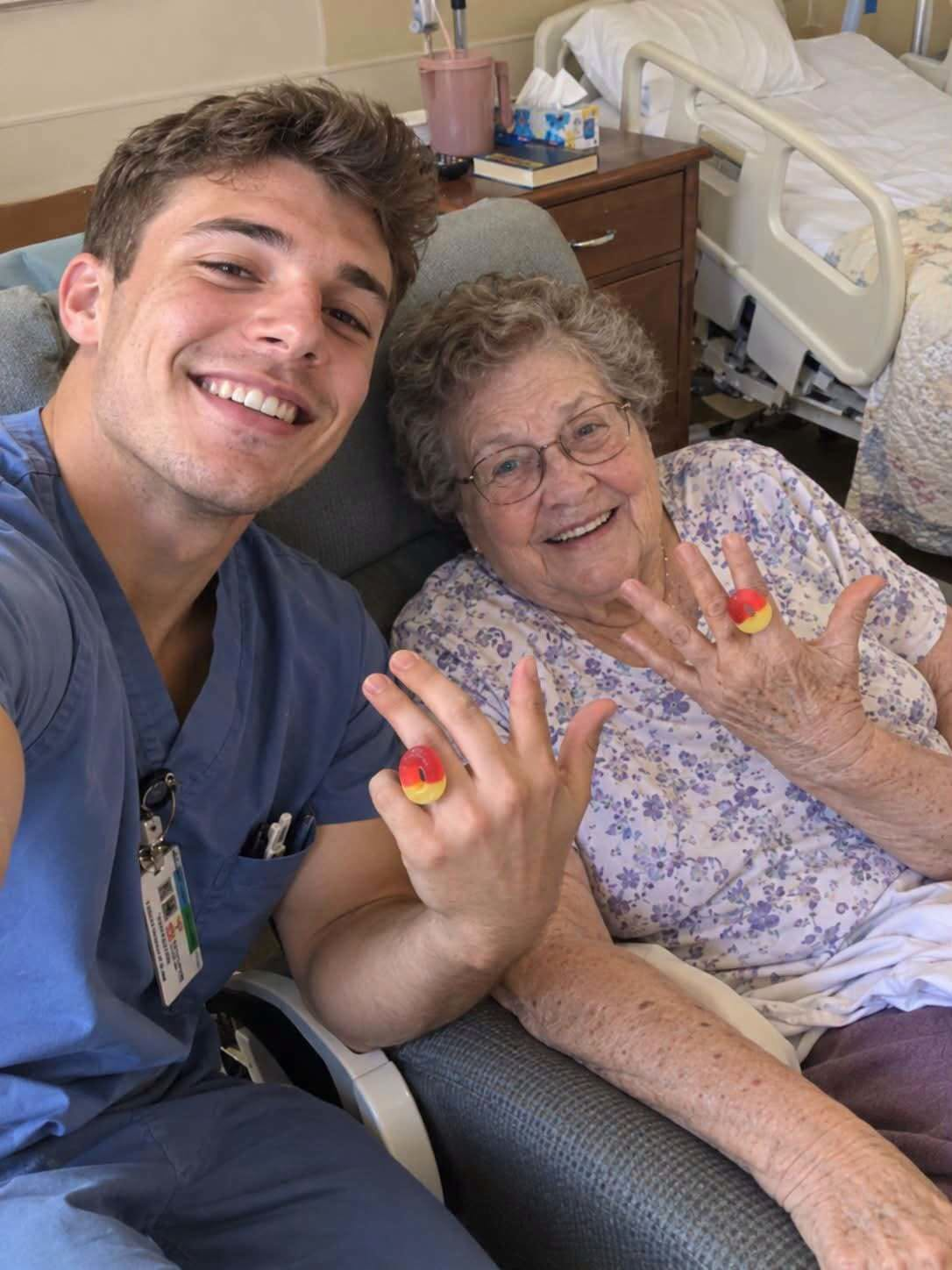
When I proposed with a cheap gummy candy ring, Eleanor laughed, then realized I was serious. She accepted, but warned me that I would inherit nothing. I promised I wanted no money. We married in a small ceremony at Willowbrook, surrounded by nurses and a few residents. Her children were furious, convinced I had manipulated their dying mother.
After Eleanor died, they challenged our marriage, accused me of exploitation, and reported me to the nursing board. I was devastated. To prove I had never wanted her fortune, I formally waived my right to inherit anything. Still, her children continued their accusations, determined to destroy my reputation.
Then Eleanor’s attorney called. She had left me something that wasn’t part of her estate. In his office, he handed me a letter, six beloved books, and a video recorded before our wedding. Eleanor explained that she had deliberately excluded me from her will to prevent anyone from claiming I had married her for money. Her doctors had confirmed she was mentally competent, and she had documented everything.
In the recording, she looked into the camera and told her children to leave me alone. “He has never brought me anything except books,” she said. “He is the kindest person I have ever known.” Her attorney also gave me Dickens, her seventy-four-year-old tortoise, whom she had entrusted to a longtime neighbor.
At the court hearing, Eleanor’s recording silenced everyone. Her children withdrew their lawsuit and nursing board complaint. Later, her daughter apologized, admitting she had been unable to accept that a stranger had given her mother the companionship her own family had failed to provide.
Today, I am a qualified nurse working in oncology. I still read to Dickens, and I carry Eleanor’s faded candy ring in my pocket. She left me no fortune, but she gave me something far more valuable: the knowledge that I was worthy of love. Whenever I finish a book, I remember her words about happy endings. Some people leave you money. Eleanor left me the truth—and the courage to believe that love can find you when you least expect it.