The Envelope
“Sally, wait!”
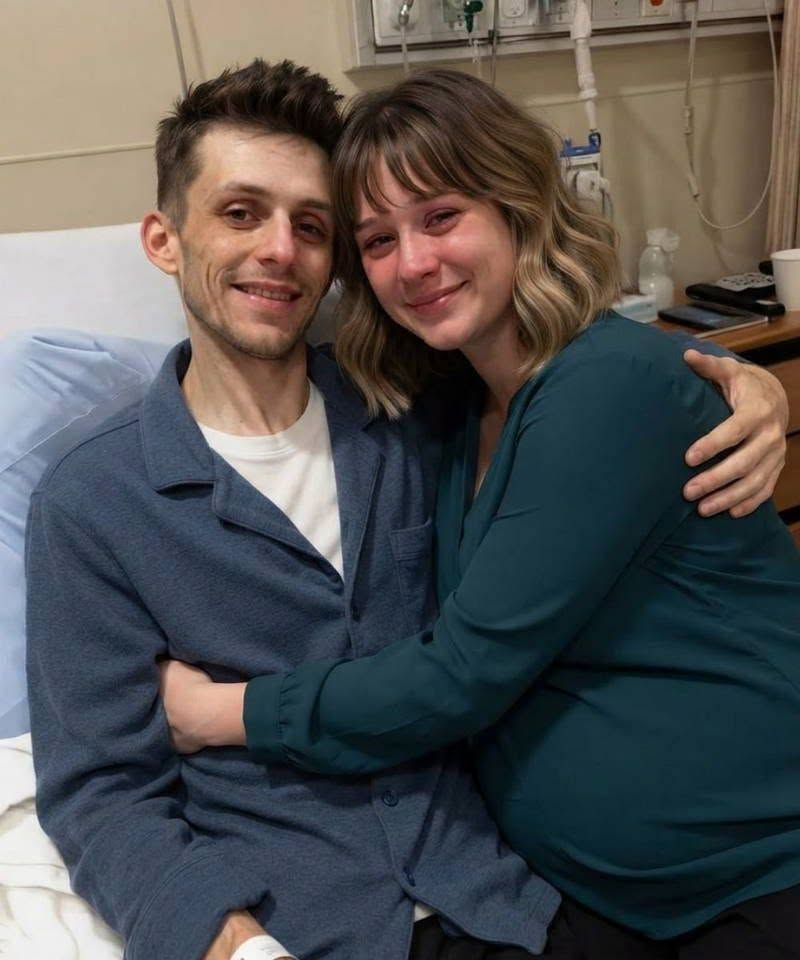
I heard the voice behind me but kept walking. I couldn’t face another sympathetic look, another person saying Mark’s name softly because I was eight months pregnant and had just lost my husband.
“Sally, please.”
This time, I stopped.
Dr. Rivers stood behind me, exhausted, holding a plain white envelope.
“Mark gave me this three weeks ago,” he said. “He made me promise not to give it to you until now.”
My eyes fell on the envelope.
“Why?”
“He said you’d understand when the time came.”
My name was written across the front in Mark’s uneven handwriting.
Sally.
Nothing else.
I took it and left the hospital carrying what felt like my husband’s final secret.
Only two months earlier, secrets had been the last thing on my mind.
Mark and I had been arguing about baby names.
“Absolutely not,” I said.
“You didn’t even consider it.”
“We are not naming our daughter Clementine.”
He laughed. “What about Cecelia?”
I looked at him. “Cecelia?”
“My grandmother used to sing a song with that name.”
“You told me she couldn’t carry a tune.”
“She couldn’t.”
I tried not to smile.
Then our baby kicked beneath his hand.
“She approved,” Mark said.
“That was not approval.”
“Strong approval.”
I placed my hand over his.
“Cecelia.”
This time, it sounded right.
We had waited years for her. Then, six months into the pregnancy, Mark got sick.
The doctors gave him three months. Maybe less.
Suddenly, every ordinary moment became something I was terrified of losing.
His Final Choice
One afternoon, while Cecelia kicked beneath my shirt, Mark said quietly, “If they can use anything after I’m gone, I want to be a donor.”
I turned sharply.
“Please don’t talk about dying while she’s kicking.”
“That’s exactly why I have to.”
He touched my stomach.
“If I can’t have the time I wanted with her, maybe someone else can have more time with their family.”
I looked away.
“I don’t know how I’m supposed to do this without you.”
“You don’t have to know yet.”
“What if I never figure it out?”
He thought for a moment.
“Then you’ll make it up as you go.”
I hated that answer because I knew he was right.
As Mark became weaker, his mother, Violet, repeatedly told him she didn’t want him to donate.
“She can’t stand the idea of parts of me going to strangers,” he explained.
“She’s losing her son,” I said. “Grief doesn’t have rules.”
Mark looked at me.
“She needs someone to be angry at. I don’t want that person to become you.”
At the time, I thought he was simply protecting me.
I didn’t realize how much he already understood.
The Secret Meetings
What happened next read in the comments
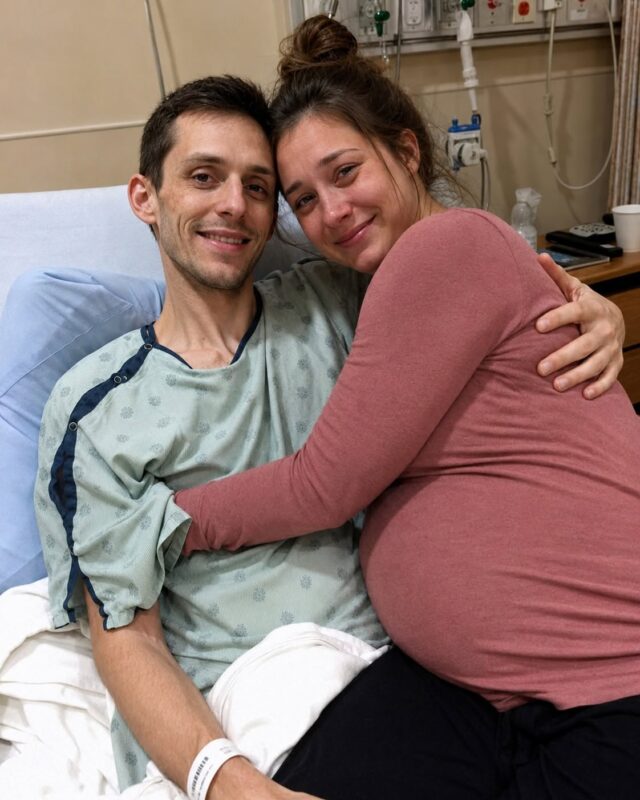
Mark began having private conversations with Dr. Rivers.
“What are you arranging?” I asked one day.
“Something I need to take care of.”
“Without me?”
“Yes.”
“But it concerns me?”
“It’s for you.”
“That makes it worse.”
He smiled faintly.
“Please trust me.”
I wanted to argue, but something in his expression stopped me.
So I nodded.
Mark died on a rainy Tuesday.
I was holding his hand when his fingers grew still.
Afterward, I signed the donation papers and answered every question I could.
When people asked whether donation truly reflected Mark’s wishes, I always said the same thing.
“Yes.”
Then Dr. Rivers gave me the envelope.
That night, I opened it.
Inside was a folded note and a flash drive.
The note said:
Please don’t watch this just because you miss me.
Watch it if someone ever makes you doubt me.
And especially if someone makes you doubt yourself.
I stared at the words.
“You’re dead,” I whispered. “You don’t get to give me instructions anymore.”
Cecelia kicked beneath my ribs.
I looked down.
“Your father is already annoying me from beyond the grave.”
I put the flash drive away.
I wasn’t ready.
Grief Needed Someone to Blame
Two days later, Violet came to the house.
“Did they take everything?” she asked.
“Only what could actually be donated.”
“And you’re okay with that?”
“No.”
She looked at my belly.
“You still get part of him.”
“Don’t bring my daughter into this.”
She left.
At Mark’s memorial, Violet confronted me again.
“My son could barely walk near the end. And now everyone expects me to believe he calmly made all these decisions?”
“He did.”
“You agreed to it.”
“Yes. I carried out my husband’s final wish.”
Later, one of Mark’s relatives asked whether medication might have affected his judgment.
That night, I finally inserted the flash drive.
Mark’s Last Defense of Me
Mark appeared on the screen.
He looked thin and exhausted.
“If you turned this on because you miss me, shut it off.”
A laugh escaped through my tears.
“You don’t get to boss me around anymore.”
Then he became serious.
“My mom asked me not to donate. Eventually, she started asking whether this was really my decision—or yours.”
My stomach tightened.
“I told her the decision was mine.”
He paused.
“Grief doesn’t give anyone permission to turn you into the villain.”
Tears filled my eyes.
“Don’t protect me by letting her hurt you.”
Then he said something that broke me.
“Don’t let Cecelia grow up hearing that her father was too confused or too weak to make his own choices.”
I paused the video.
“You knew,” I whispered.
I was angry with him for the first time.
Two days later, Violet came over with a baby blanket.
“Cecelia should carry Mark’s name somehow.”
“We already chose her name.”
“He told me he was reconsidering.”
“No, he didn’t.”
She looked at me sharply.
“He kept things from you too.”
That hurt because it was true.
But truth could still be used as a weapon.
“Go home,” I said.
She stared at me.
“You’ve questioned whether Mark knew what he was doing. You’ve let people question whether I manipulated him. And now you’re trying to change what he wanted for our daughter.”
“I lost my son.”
“I know. But you don’t know what it feels like to bury my husband while carrying the daughter he will never meet.”
She left.
For the first time, I stopped feeling guilty for setting a boundary.
Cecelia Arrives
Two weeks later, Cecelia was born.
When the nurse placed her on my chest, she curled her tiny hand into a fist.
Exactly the way Mark used to sleep.
A sob escaped me.
“Of course,” I whispered. “You sleep like your dad.”
When Violet came to meet her granddaughter, she asked, “May I hold her?”
That question mattered.
I handed Cecelia to her.
For a few minutes, grief stopped being a battlefield.
But weeks later, I overheard Violet telling someone, “Mark wasn’t himself near the end. I still don’t believe he would have chosen all of that if he’d been thinking clearly.”
I walked into the room.
“Give me my daughter.”
Violet handed her over.
“You will never say that in front of her again.”
“She’s a baby.”
“She won’t always be.”
Violet looked at Cecelia.
“You still have something of him.”
I stared at her.
Then I said, “You had me.”
She froze.
“I loved you too, Violet. You lost your son, but I didn’t stop being your family when Mark died.”
Her face crumpled.
“You’ve spent weeks making me the enemy because blaming me is easier than accepting that Mark made a choice you couldn’t control.”
“He wasn’t himself.”
“He knew you would say that.”
I opened my laptop.
“Mark left something for me.”
I played the video.
“Donation was my decision,” Mark said.
Violet closed her eyes.
“Mom, loving me doesn’t mean you get to decide which choices were really mine.”
Then he added:
“Don’t make Sally prove she loved me by agreeing with you. And please don’t put Cecelia in the middle.”
The room went silent.
I turned to Violet.
“I want Cecelia to know her grandmother. But you cannot tell her that I forced her father into this. You cannot teach her that he was too weak to understand what he wanted.”
Violet nodded through her tears.
“I don’t know who I am without him.”
“Neither do I,” I said.
Learning to Miss Him Without Losing Ourselves
Six months passed.
Nothing magically became normal.
But Violet and I slowly began to heal.
She stopped searching for someone to blame.
When she missed Mark, she simply said, “I miss him.”
And I learned to answer, “I do too.”
One afternoon, Violet sat on the floor while Cecelia played with a wooden block.
“Look at that grip,” Violet said. “Just like Mark.”
Then she stopped.
She touched Cecelia’s tiny hand.
“No,” she whispered. “That belongs to her.”
My throat tightened.
Cecelia squealed and threw the block into Violet’s lap.
We both laughed.
For the first time since Mark died, neither of us needed Cecelia to prove he was still with us.
She didn’t need to carry his memory.
She didn’t need to replace him.
She was simply herself.
I would tell her about her father—the porch, his terrible baby-name suggestions, the way he made me laugh when I was afraid, and how happy he was when she first kicked beneath his hand.
I would tell her that when Mark learned he had little time left, he chose to give whatever he could to someone else.
But I would never ask her to become him.
Neither would Violet.
Mark had been here.
He had been loved.
He was still missed.
That was enough.
Cecelia didn’t have to carry the weight of proving it.
She was free to become entirely herself.