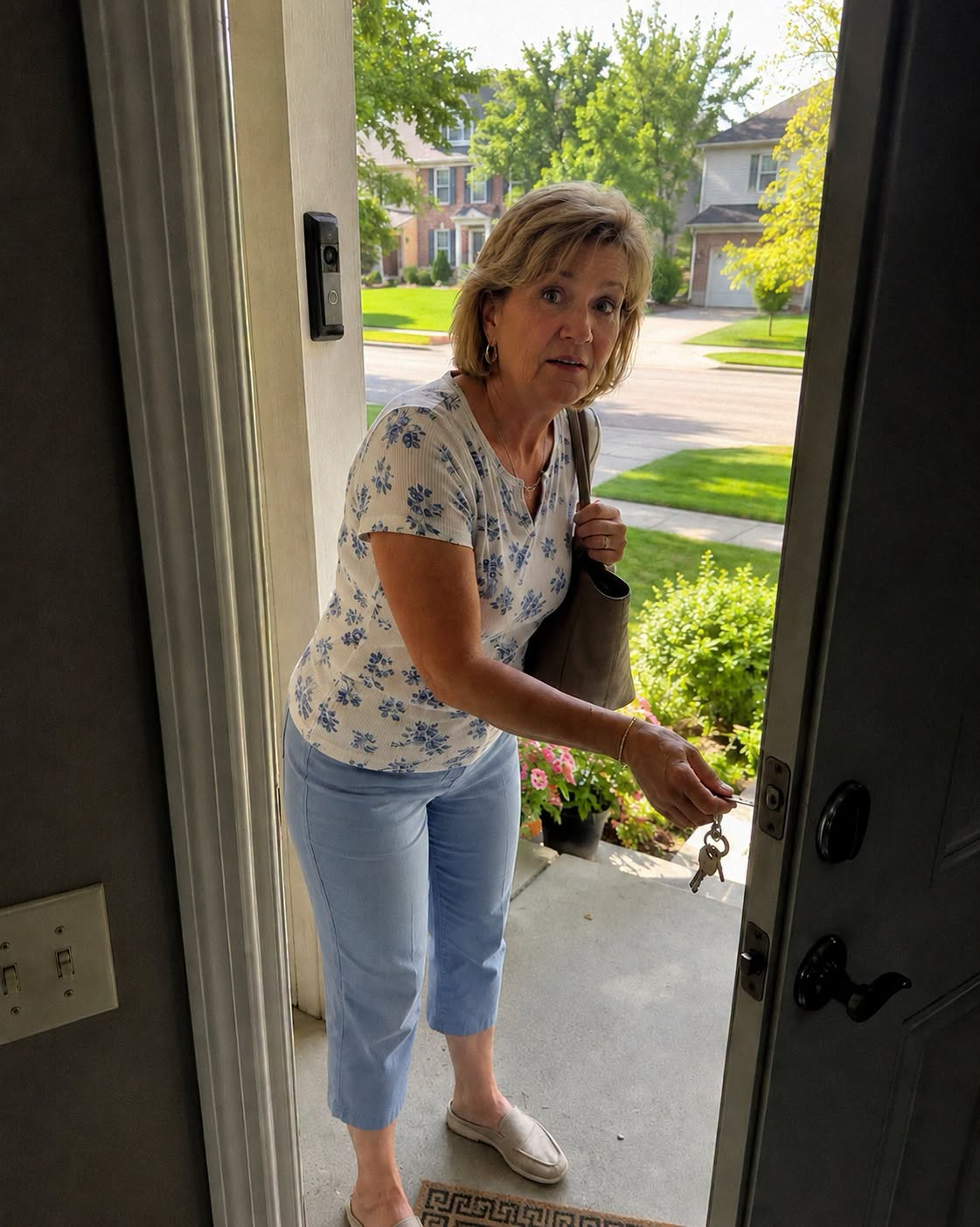
For four years, my mother-in-law treated the key to our house like an open invitation.
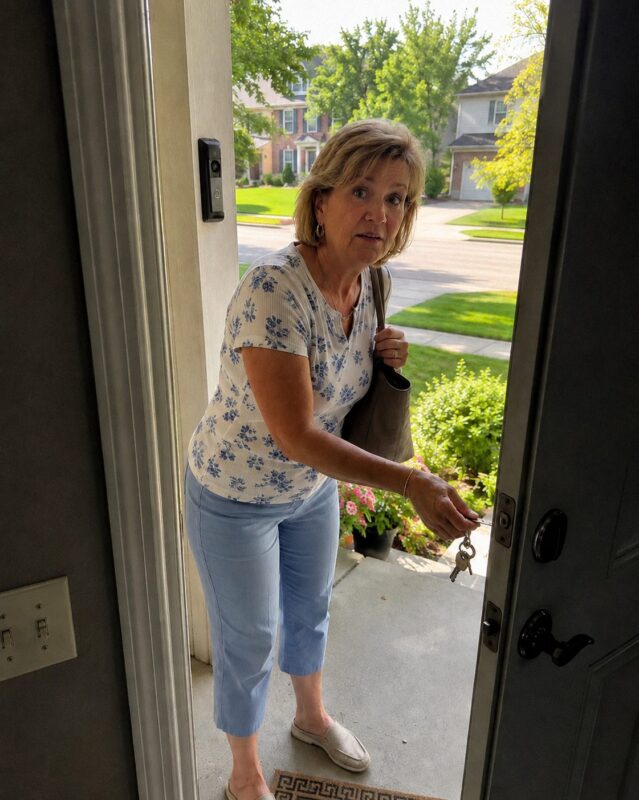
The next morning at 9:00, I heard her key turn in the front door.
I was already sitting at the kitchen table, waiting.
My husband, Mark, had given his mother a key when we moved in.
“For emergencies,” he had said.
There had never been an emergency.
There had, however, been plenty of uninvited visits.
Once, I came downstairs after a shower and found her sitting at my kitchen table while I was wearing nothing but a towel. She laughed when I screamed.
Another time, she reorganized my daughter’s clothes because they were “a mess.”
She opened our mail, threw away food, moved things around the kitchen, and came into the house when nobody was home.
Whenever I complained, she used the same excuse:
“I was only trying to help.”
I asked Mark four times to take the key back.
The first time, he laughed. The second time, he promised to talk to her. The third time, he called her while I stood beside him.
“Mom, you can’t just walk in.”
She laughed.
“Oh, please. I’m not some stranger.”
The fourth time, Mark finally said, “She’s family, Marianne. What do you want me to do, change the locks on my own mother?”
“Yes,” I said.
He thought I was joking.
I wasn’t.
Then, last Tuesday, my meeting was canceled, and I came home early.
Her car wasn’t in the driveway, but that didn’t mean much anymore. She had recently started parking around the corner.
I walked inside and heard a drawer upstairs.
Then I saw her purse.
She was in our bedroom, sitting on the floor beside my dresser. My paperwork was spread across the carpet, and she was reading through a folder containing bank statements, insurance documents, tax records, and personal letters.
She looked up.
“Oh. You’re home.”
Then she went back to reading.
I wanted to scream.
Instead, I realized something.
She wanted me to get angry. Then she could tell Mark that I’d attacked her again while she was “only helping.”
So I stayed calm.
I sat on the bed and smiled.
“You know what? Thank you.”
She frowned.
“Excuse me?”
“It means a lot that you care so much about this house.”
For the first time, she looked uncertain.
Then I said, “Come back tomorrow at 9:00. I want you to go through the whole house. Every room. I’ll make coffee.”
She agreed immediately.
That evening, I told Mark what had happened.
His first response was predictable.
“Maybe she was looking for something.”
“In my dresser?”
“I’m not saying she should have done it.”
There it was again—the excuse.
“You’ve talked to her four times,” I said. “I don’t want you to talk to her again.”
He looked confused.
“Then what do you want me to do?”
“Nothing.”
The next morning, Mark left for work at 8:15.
Instead, he parked nearby and secretly came back into the house.
At 9:00, his mother walked in.
I gave her coffee.
“Where do you want me to start?” she asked.
“Anywhere you like.”
She happily began opening cabinets and drawers, completely unaware that Mark was hiding upstairs.
A few minutes later, he came out.
Then his mother called from upstairs.
“Marianne, where did you put those insurance papers? The ones from your bottom drawer?”
Mark froze.
“She knows where you keep them?”
“Apparently.”
He went upstairs.
We found his mother in our daughter’s room, going through her clothes.
What happened next read in the comments
“This is too small for her,” she said. “Why is it still here?”
Then she saw Mark.
“What are you doing?” he asked.
“Marianne asked me to come.”
“I know. Today.”
His voice hardened.
“Were you going through their bedroom yesterday?”
“I was looking for something.”
“What?”
She hesitated.
“I don’t remember.”
Mark stared at her.
“You came into our house when nobody was home, went into our bedroom, and read private paperwork.”
“I was helping.”
“No, Mom. You weren’t.”
For the first time, I heard him say it.
She immediately became defensive.
“I can’t believe you’re speaking to me like this after everything I’ve done for this family.”
“That,” Mark said quietly, “is exactly why I’ve avoided this conversation. I knew you’d make me feel guilty.”
She turned toward me.
“You planned this.”
“I invited you,” I said. “I wanted Mark to see what happens when nobody stops you.”
She insisted she hadn’t done anything wrong.
I looked at the open dresser.
“That’s the problem. You genuinely believe that.”
Then Mark asked, “Why do you park around the corner?”
She went silent.
“I like walking.”
“Then why don’t you walk here from your house?”
She had no answer.
Mark held out his hand.
“Give me the key.”
She stared at him.
“You gave me that key.”
“I did. For emergencies.”
“And what if there is one?”
“We’ll call you.”
After a long pause, she dropped the key into his hand.
At the door, she looked at me.
“I hope you’re happy, Marianne.”
Before I could answer, Mark said, “Don’t blame her. I gave you the key. I should have taken it back the first time she asked.”
She left.
Mark locked the door and put the key on the counter.
“I’m sorry,” he said.
“I don’t need you to apologize because you saw it happen once. I need you to understand that I saw it happen for four years.”
He nodded.
“I do now.”
That afternoon, he changed the locks anyway.
The fallout lasted weeks. His mother accused me of manipulating everything, but Mark kept giving her the same answer:
“Marianne didn’t make you open those drawers.”
Eventually, his mother apologized.
She admitted she’d become used to treating Mark’s home as an extension of her own.
I didn’t argue about her intentions.
Intent wasn’t the point anymore.
The boundary was.
The next time she visited, she rang the doorbell.
When I opened the door, she asked, “May I come in?”
Four simple words.
In four years, she’d never asked.
I stepped aside.
“Yes.”
Things didn’t magically become warm between us.
But she knocked.
She stopped going through our belongings and asked before taking things from cabinets.
Mark changed, too. He finally understood that setting boundaries with his mother wasn’t rejecting her.
It was simply asking her to behave like a guest when she was a guest.
For years, I thought getting angry would make my mother-in-law understand.
It never did.
My anger only gave her something else to argue about.
The day I stopped fighting her and let Mark see the problem for himself, she couldn’t turn my reaction into the story anymore.
For once, her behavior had to speak for itself.
And it did.