My neighbor Denise had borrowed at least ten things from me that year.
It started with my ladder, then the pressure washer, and eventually half my kitchen: my slow cooker, steamer, cooler, roasting pan, and more.
Almost everything came back late, dirty, damaged, or missing a piece.
I kept letting it slide because we had been neighbors for six years. Our kids had grown up together, and we helped each other when someone was out of town.
The truth was, I was terrible at saying no.
Then one Tuesday, Denise appeared at my door.
“Please tell me you own a stand mixer.”
“I do.”
She pointed toward my kitchen.
“The cream-colored one?”
My stomach tightened.
It was an old KitchenAid my mother had bought in 1989. She had used it every Sunday until she became too weak to cook. After she died, I kept the mixer because the sound of its motor reminded me of her.
“No,” I said. “I’d rather not lend that one out. It belonged to my mother.”
Denise laughed.
“I’ll be careful. I only need it for one cake.”
I hesitated.
Then, as usual, I gave in.
“Fine.”
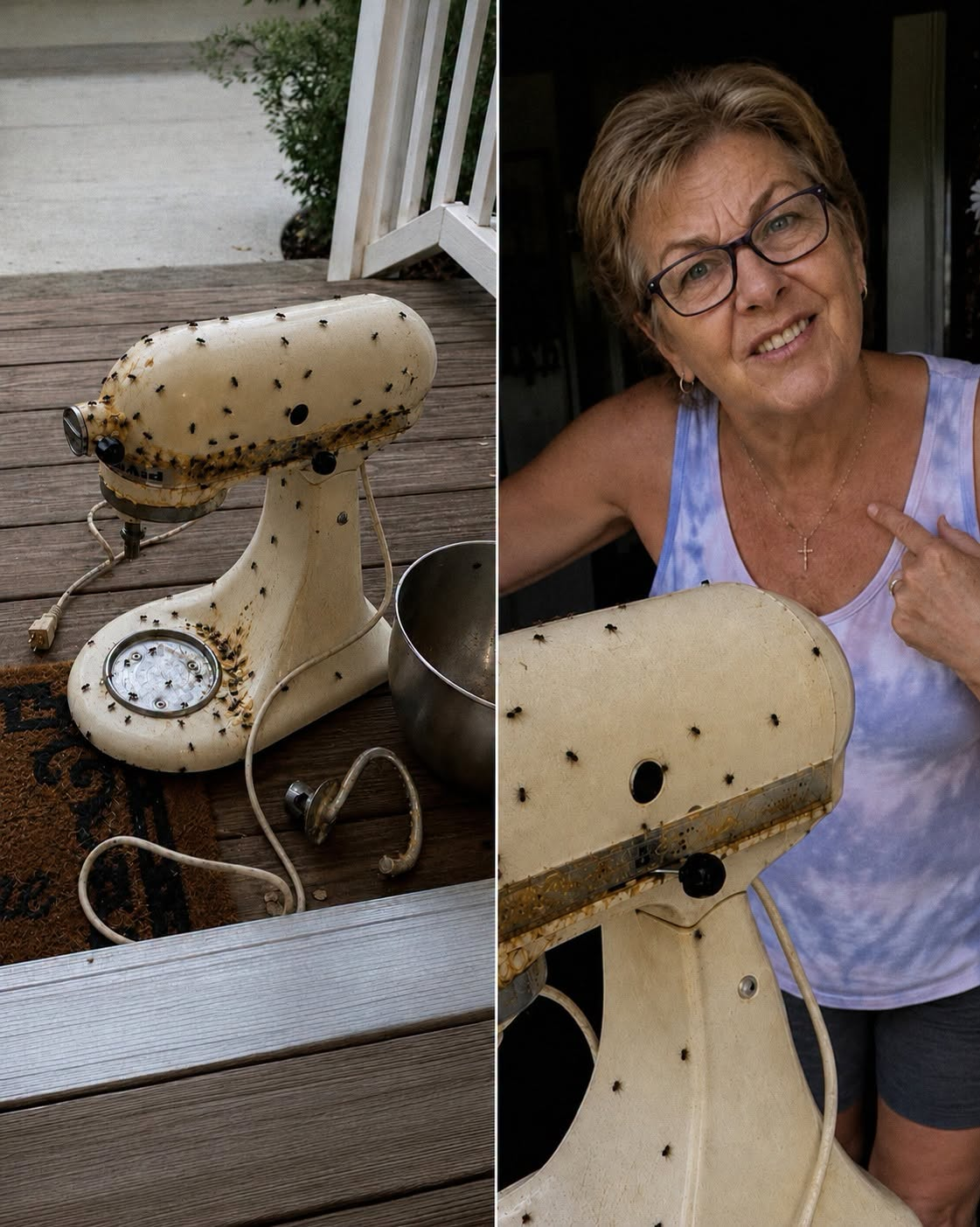
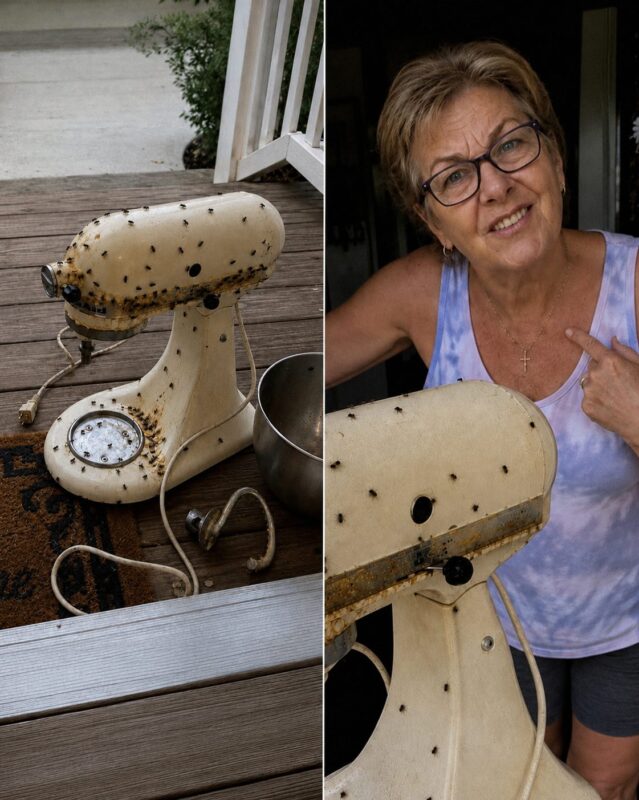
Saturday morning, I found the mixer abandoned on my porch.
It was covered in dried cream and frosting. I cleaned it, plugged it in, and switched it on.
The motor made a terrible grinding sound.
Then stopped.
I went straight to Denise’s house.
“The mixer doesn’t work.”
She shrugged.
“You should probably just buy another one. That thing is ancient.”
“It worked when you borrowed it.”
“It was more than thirty years old.”
“Did you overload it?”
“No.”
Her expression shifted.
“Did you keep running it after it started struggling?”
She hesitated.
“I was trying to finish the frosting.”
“So you did.”
She sighed.
“It stopped in the middle of making the cake. I had eleven people waiting.”
Then she added, “Honestly, you should thank me. Now you have a reason to replace it.”
That was when I realized she genuinely believed she had done nothing wrong.
I took the mixer to a repair shop. The technician inspected it and told me the motor had overheated because it had been overloaded and kept running after it started struggling.
The repair cost: $347.
I sent Denise the bill.
Her response was immediate:
“LOL absolutely not. I’m not paying $347 for a mixer from the 1980s.”
So I paid it myself.
Then I decided I was done being the neighbor who always said yes.
The following weekend, Denise was hosting her niece’s graduation party. Three days before the party, she came to my door.
“Can I borrow the big cooler, your slow cooker, and those folding tables?”
“Sure.”
She started toward my garage.
“Wait.”
I went inside and returned with a clipboard.
She stared at it.
“What’s that?”
“A lending agreement.”
I listed every item, along with its replacement value.
Then I added three conditions:
Return everything by Sunday at 6 p.m.
Return everything clean and dry.
Return everything in the same condition.
At the bottom was a $350 refundable deposit.
And beneath that:
Outstanding KitchenAid repair bill: $347.
What happened next read in the comments
Denise stared at the page.
“You cannot be serious.”
“I’m completely serious.”
“You expect me to pay almost seven hundred dollars just to borrow a few things?”
“No. The $350 is refundable. The $347 is what you already owe.”
“This is petty.”
“Then don’t borrow anything.”
She glared at me.
“It’s over one stupid mixer!”
I looked at her.
“It wasn’t stupid to me.”
For once, she went quiet.
The next morning, she came back.
“The rental company messed up. I need the tables.”
I held out the clipboard.
She sighed.
“Fine.”
She wrote a check for $697.
I helped her carry everything to her house. I wasn’t trying to ruin her niece’s party. I simply wanted my belongings treated with respect.
The party went ahead.
Sunday afternoon, Denise returned everything.
The tables were neatly folded.
The cooler was clean and dry.
The slow cooker was spotless.
The drink dispenser she had also borrowed looked better than when I gave it to her.
I handed her back the $350 deposit.
She looked at me.
“You’re keeping the mixer money?”
“No. The repair shop already has it.”
She frowned.
Then, after a long silence, she said:
“I shouldn’t have left it outside.”
“No.”
“And I shouldn’t have blamed you.”
“No.”
Another pause.
“I’m sorry.”
It wasn’t dramatic, but it sounded genuine.
“Thank you,” I said.
Two days later, the repair shop called. My mother’s mixer was ready.
When I switched it on, the motor started smoothly.
Exactly the sound I remembered.
That weekend, my daughter and I made my mother’s Sunday chocolate cake.
The mixer still had the same scratches and tiny chip in the enamel.
It was ancient.
But it was mine.
Denise never asked to borrow it again.
Actually, she stopped borrowing almost anything for several months.
Then, one afternoon, she appeared at my door.
“Do you still have the pressure washer?”
“Yes.”
She sighed.
“Do you still have those forms?”
I smiled.
“Absolutely.”
She rolled her eyes and signed one.
When the pressure washer came back, it was clean, on time, and full of fuel.
For years, I thought saying no would make me a bad neighbor.
Instead, setting boundaries taught Denise something simple:
My belongings mattered, even if they didn’t matter to her.
The deposit didn’t change her because she suddenly learned how to be careful.
It changed her because, for the first time, she had something of her own at risk.
And my mother’s mixer still sits on my kitchen counter.
Same scratches.
Same little chip.
Same familiar sound.
Denise was right about one thing.
It is ancient.
And that’s exactly why I wanted it back.