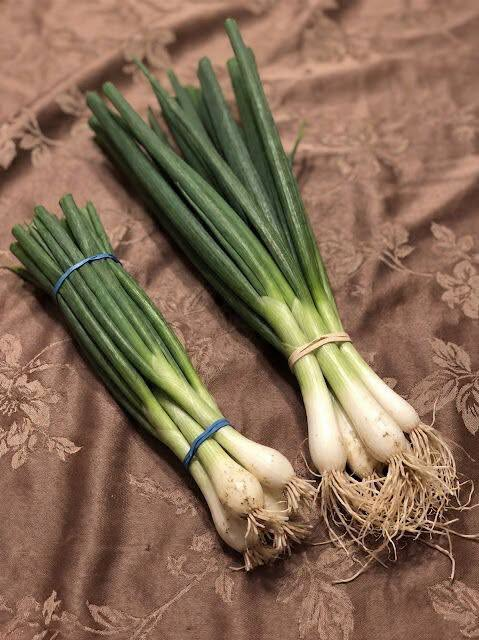
Green onions, scallions, spring onions, and chives may look nearly identical at first glance, but they each bring something different to the table. Understanding those differences can elevate your cooking and help you choose the right ingredient with confidence.
Green onions and scallions are actually the same thing. They are young onions harvested before a bulb fully develops, which is why they have a small white base and long green stalks. Their flavor is mild, fresh, and slightly sweet. Both parts are edible—the white portion has a stronger bite, while the green tops are more delicate. They work well both raw and cooked, making them perfect for salads, soups, eggs, noodles, and stir-fries.
Spring onions are a bit more mature. They have a small bulb at the base, which gives them a richer, slightly sweeter onion flavor—closer to a mild red or yellow onion. Because of this, they are great for grilling or roasting whole. The bulb can be sautéed like a regular onion, while the greens still serve well as a garnish.
Chives, on the other hand, are not considered an onion vegetable but an herb. They have thin, grass-like stems and no bulb at all. Their flavor is very mild and delicate, making them ideal for finishing dishes rather than cooking into them. They are best sprinkled fresh over soups, dips, eggs, or potatoes when you want just a hint of onion without overpowering the dish.
Once you recognize these differences, you’ll waste less, cook smarter, and bring out better flavor in everything you make.